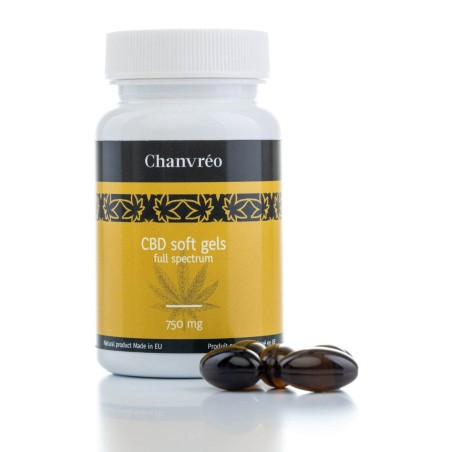
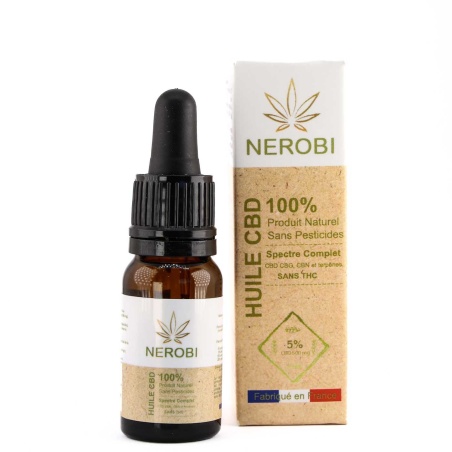
5%
Rich in legal cannabis extracts, CBD Full Spectrum oil mobilizes all the active ingredients of the hemp plant to give you all the benefits of cannabidiol... with the added bonus of the entourage effect that activates synergies between the various components of hemp. Find our CBD Full Spectrum oils (enriched with coconut MCT, maca or vitaimne C) with less than 0.2% THC from the best hemp producers in France, Switzerland and Italy.
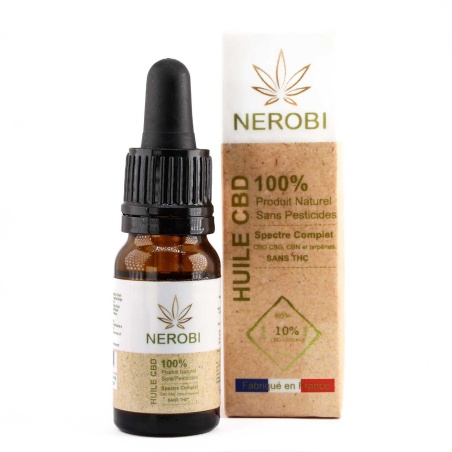
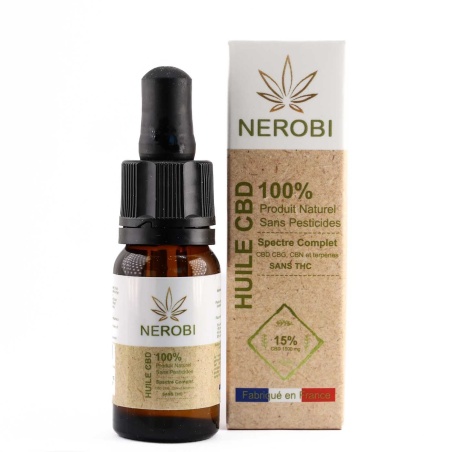
Before getting started, it’s important to understand what the term “full spectrum” really means and why it’s not just another CBD oil.
Full-spectrum CBD oil is a hemp extract that preserves all the plant’s natural compounds. It’s not simply isolated CBD. It’s the whole plant, or almost. The idea is to capture the very essence of hemp.
This includes CBD, but also around a hundred other cannabinoids, as well as terpenes and flavonoids. This richness is what makes it unique. We’re talking about a “raw,” unaltered formula.
The goal is to benefit from the interaction between all these elements. It’s a holistic approach to CBD. Instead of focusing on a single molecule, you take the entire “totum” of the plant.
Three main families of compounds are present: cannabinoids, terpenes, and flavonoids. Each plays its own role. It’s a true botanical cocktail.
Let’s start with cannabinoids. CBD remains the main player, but it’s accompanied by other minor cannabinoids such as CBG (cannabigerol), CBN (cannabinol), and CBC (cannabichromene). Each has specific properties that complement CBD’s effects.
Terpenes are responsible for aromas (pine, citrus, earthy notes), while flavonoids are known for their antioxidant properties.
Let’s address the key issue: THC content. Full-spectrum CBD oil contains trace amounts of THC. This is a direct result of full extraction, but it does not make the product illegal.
French law is clear. The product is legal as long as the THC level in the final extract does not exceed 0.3%. That’s the threshold not to cross.
Rest assured, an oil that complies with this standard has no psychoactive effect. The amount of THC is far too low to cause a “high.” It’s a wellness product, not a narcotic.
The Science Behind Full Spectrum: The Entourage Effect
Now that you know what’s inside, let’s look at why this composition matters so much. It all comes down to a key concept: the entourage effect.
The entourage effect is the idea that hemp compounds work far better together than alone. It’s a natural synergy where molecules reinforce one another. In short, here, 1 + 1 = 3.
In practical terms, cannabinoids interact with each other. CBD, for example, tempers THC, neutralizing its psychoactive aspect while preserving its benefits, while CBG and CBN add their own strengths. It’s a precise chemical balance.
The overall result is therefore far superior to the simple sum of isolated ingredients. A full-spectrum oil isn’t just “enhanced CBD”; it’s a product whose effectiveness is multiplied by this complex, living molecular interaction.
It’s time to stop thinking that terpenes only give the product its green smell. They’re not there for decoration. They actively contribute to the entourage effect by guiding how cannabinoids act.
Take concrete examples. Myrcene, with its earthy notes, is known to support relaxation. Limonene, with its citrus aroma, is associated with mood, while pinene may promote alertness. Each aroma serves a physiological purpose.
And let’s not forget flavonoids. Though less talked about, these pigments offer powerful antioxidant and anti-inflammatory effects, well known in the plant kingdom. They add an extra layer of protection.
Often labeled as “secondary” compounds, these elements are in fact essential partners. They modulate, refine, and enrich the action of CBD. Ignoring them means missing the very essence of the product.
Synergy allows for broader and stronger action. Instead of targeting a single receptor, it influences a wide range of bodily mechanisms, offering potentially deeper and more pronounced effects.
For users, this holistic approach often translates into clearer results in overall well-being, stress management, or sleep quality. The experience feels more complete.
Ultimately, it’s about respecting the plant. The entourage effect means using hemp as nature designed it, without stripping it down or diluting it. It’s the choice of raw authenticity.
The term “full spectrum” really makes sense when compared to the other types of oils available on the market. Let’s break it down so you can make an informed choice.
CBD isolate is just the molecule itself, chemically isolated. Nothing more. You get a crystalline powder that’s over 99% pure, completely stripped of the plant’s natural environment. It’s clinical CBD, with no terpenes or flavonoids.
It’s the default choice for those who cannot tolerate even the slightest trace of THC. If your job requires strict saliva tests or if you avoid psychoactive effects on principle, this option offers total security.
The downside is that isolate skips the plant’s natural synergy. Deprived of other hemp compounds, it doesn’t benefit from the entourage effect. Its action is often considered more limited than that of full-spectrum oil, especially when expectations are high.
Broad spectrum aims to combine the best of both worlds. The extraction preserves hemp’s richness: terpenes, flavonoids, and minor cannabinoids like CBG or CBN are all present.
The key difference lies in an extra refinement step: THC is selectively removed. You keep the group dynamics between the remaining molecules, but without the prohibited substance, which reassures many users.
It’s a strategic option for those who want broader effects than isolate, with a guaranteed zero THC content. If you’re looking for a balance between effectiveness and legal peace of mind, it’s a strong candidate for getting started safely.
Full spectrum remains the gold standard for purists. It’s a raw extraction that filters nothing out, preserving the plant’s entire molecular profile, including natural traces of THC (always below the legal limit of 0.3%).
Why does this matter? Because it’s the only configuration that unlocks a complete entourage effect. Even in tiny amounts, THC acts as a key catalyst that appears to boost absorption and overall potency.
|
Feature |
Isolate |
Broad Spectrum |
Full Spectrum |
|
Composition |
Pure CBD (isolated) |
All compounds except THC |
All compounds (CBD, terpenes, etc.) |
|
THC presence |
No |
No (0.0%) |
Yes (traces < 0.3%) |
|
Entourage effect |
None |
Partial |
Complete |
|
Ideal for… |
People wanting 0% THC and a neutral taste |
People wanting synergy without THC |
People seeking maximum effectiveness |
This table highlights a simple reality: there’s no such thing as a “bad” oil, only products suited to different needs. That said, if your priority is raw potency and you have no professional constraints related to testing, full spectrum often stands out. It’s this complex interaction between hundreds of molecules that makes the difference in how it feels. You’re not just consuming CBD, but the full power of the plant.
Convinced by full spectrum? Perfect. But be careful: not all oils are created equal, and the market is full of questionable products. Here are the precise criteria you need to examine closely to avoid wasting your money.
The percentage shown on the bottle is the key factor. It simply indicates how much cannabidiol is diluted in the finished product. The higher the number (5%, 10%, 20%, etc.), the more active compounds each drop contains.
As a general guideline, it’s fairly straightforward. Light concentrations, between 5% and 10%, are ideal for getting started gently or managing occasional discomfort. If you already have some experience, aim for the 15–20% range. High-strength oils at 30% or 40% are best reserved for experienced users.
Don’t fall into the “stronger is better” trap. The ideal dosage is highly personal and depends on your individual sensitivity. Start low, listen to your body, and increase only if needed.
How cannabinoids are separated from the plant determines the purity of what you consume. Poor extraction can destroy terpenes or leave chemical residues behind. This is a technical detail, but it makes all the difference in the final result.
Always look for supercritical CO₂ extraction. It is the gold standard in the industry. This method uses high-pressure CO₂ to isolate active compounds without overheating the plant or relying on toxic solvents. The result is a clean, potent oil that remains true to the original plant profile.
Other methods exist, such as ethanol extraction or infusion using carrier oils. They can be acceptable, but they often lack precision. For a true full-spectrum CBD oil with no compromise on safety, CO₂ extraction remains the benchmark.
Pure hemp extract is a thick paste that cannot be consumed as is. It must be diluted in a carrier oil to allow precise sublingual dosing and better absorption by the body. This carrier affects both taste and effectiveness.
Two options dominate the market. On one side, MCT coconut oil, valued for its neutral taste and fast absorption into the bloodstream. On the other, hemp seed oil, favored by purists seeking a 100% plant-based synergy. In both cases, organic quality should be non-negotiable.
Finally, pay close attention to the origin of the hemp. Hemp is a powerful bio-accumulator: it absorbs everything from the soil, including pollutants. Choosing oil made from organically grown hemp is therefore a health decision, not just an ecological one. French or European origins generally guarantee strict agricultural standards, far from pesticides and heavy metals.
Think of the Certificate of Analysis (CoA) as the unforgeable ID card of your bottle. Issued by an independent third-party laboratory, it proves that the manufacturer is telling the truth. It’s your only real safeguard against misleading labels.
This report details everything: the exact CBD content, trace levels of THC (within legal limits), and the terpene profile. Most importantly, it confirms the absence of contaminants such as heavy metals, residual solvents, or pesticides.
A trustworthy brand displays these results openly on its website. Since the market is still loosely regulated when it comes to purity, if you can’t find these analyses, walk away. Demand full transparency before ingesting anything.
Found the right oil? Now it’s time to put it into practice. Here’s how to use it and, more importantly, how to find the dosage that works for you.
The sublingual route remains the gold standard for consuming full-spectrum CBD oil. Simply place the drops directly under your tongue using the dropper. It’s the most direct way to benefit from cannabinoids without loss.
Why this method? Biology. The area under the tongue is rich in blood capillaries. CBD passes through these thin membranes directly into the bloodstream, bypassing the digestive system and the liver, where part of the compound would otherwise be broken down.
For best results, hold the oil in your mouth for 60 to 90 seconds before swallowing. This gives the mucous membranes time to absorb it fully. Effects are usually felt fairly quickly, often within 15 to 30 minutes.
Forget miracle formulas or standard dosages found online. The ideal amount varies widely depending on your weight, unique metabolism, and the intensity of your needs. Your body sets the dose, not the label.
One golden rule applies among experts: start low and go slow. This is the only reliable way to find your sweet spot without overwhelming your receptors.
The goal isn’t an immediate “shock” effect, but identifying the minimum dose that works for you.
If, after a few days, you don’t notice improvement, it’s time to adjust. Increase the dose in tiny increments. Simply add one drop to your usual intake. This gradual approach helps avoid side effects and unnecessary waste.
You can also split your dose. Instead of taking everything at once, try dividing it: a few drops in the morning to support your day, and the rest in the evening.
Above all, be patient. Finding your optimal dose isn’t a race—it can take several weeks. Listening to your body remains your most reliable guide.
Before you begin, keep a few practical points and precautions in mind to ensure a smooth, worry-free experience.
Quality oil dislikes three things: direct light, excessive heat, and air. Forget windowsills or humid bathrooms. The best place is a cool, dark cupboard.
If your oil becomes cloudy or solidifies, don’t panic. This crystallization is perfectly natural, especially with high concentrations above 30%. In fact, it’s often a good sign of purity.
To restore a liquid texture, simply place the tightly closed bottle in warm (never boiling) water for a few minutes. Gently shake it, and the oil will return to its original consistency.
CBD is not a harmless candy. Although it’s generally well tolerated, some users report temporary dry mouth or mild drowsiness. Digestive discomfort can also occur if the starting dose is too high.
The main area of caution involves the liver. Cannabidiol can occupy certain enzymes responsible for metabolizing other substances. As noted by Harvard Medical School, CBD may interact with certain medications by altering their concentration in the bloodstream—this is the well-known “grapefruit effect.”
If you’re on long-term medication, especially blood thinners, don’t experiment on your own. Consulting your doctor before adding full-spectrum CBD to your routine is essential. Don’t make this decision alone.
This is the uncomfortable question, but it must be addressed honestly. True full-spectrum CBD oil legally contains trace amounts of THC. In the event of a roadside check, the concern about a positive saliva test is technically valid.
Let’s be clear: the risk is low, but it’s not zero. Heavy, daily use can lead to the accumulation of detectable metabolites in the most sensitive law enforcement tests.
As a precaution, avoid driving immediately after taking your oil. If your driver’s license is essential for your work, consider switching to a broad-spectrum oil, which is guaranteed to contain zero THC.
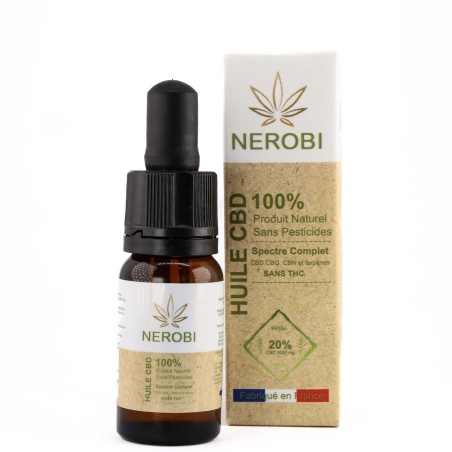
In the current state of the stock available on our online store, the price of Full Spectrum CBD oils varies from €29.90 for Nerobi 5% Full Spectrum CBD Oil (10ml bottle) at €89.90 for Nerobi 20% Full Spectrum CBD Oil (bottle of 10ml). If your budget is more limited, you can opt for a MCT Broad Spectrum Vegetable Hemp Oil (with coconut oil extracts, neutral taste).
Like any cannabidiol product, full-spectrum CBD oils are governed by European decree n°639 – 2014. All the CBD oils offered by 321CBD have a THC level of less than 0.2%, a guarantee absence of any psychotropic effect, in accordance with the regulations in force in France. As a reminder, the WHO expert committee notes that "CBD does not appear to have any potential for abuse and is not harmful to health" (opinion published in 2018).
321CBD offers you a wide range of Full Spectrum CBD oils, with benefits enhanced by the entourage effect. Our full-spectrum CBD oils are packed with quality hemp extracts, cannabinoids and terpenes for a soothing effect to better control your stress and anxiety and relieve your chronic pain.
Complete documentation is available on each product, with the list of components, the plant of origin, the method of extraction, the method with which the oil was made, the concentration of CBD as well as our recommendations for use to help you make an informed choice. All of our Full Spectrum CBD oils comply with the regulations in force in France, with a THC concentration of less than 0.2%.
 Secure payment
by credit card
Secure payment
by credit card
 Customer service
based in Strasbourg
Customer service
based in Strasbourg
 Free delivery
fast and discreet
Free delivery
fast and discreet
 Premium quality
at the best price
Premium quality
at the best price